Food Processing and Preservation
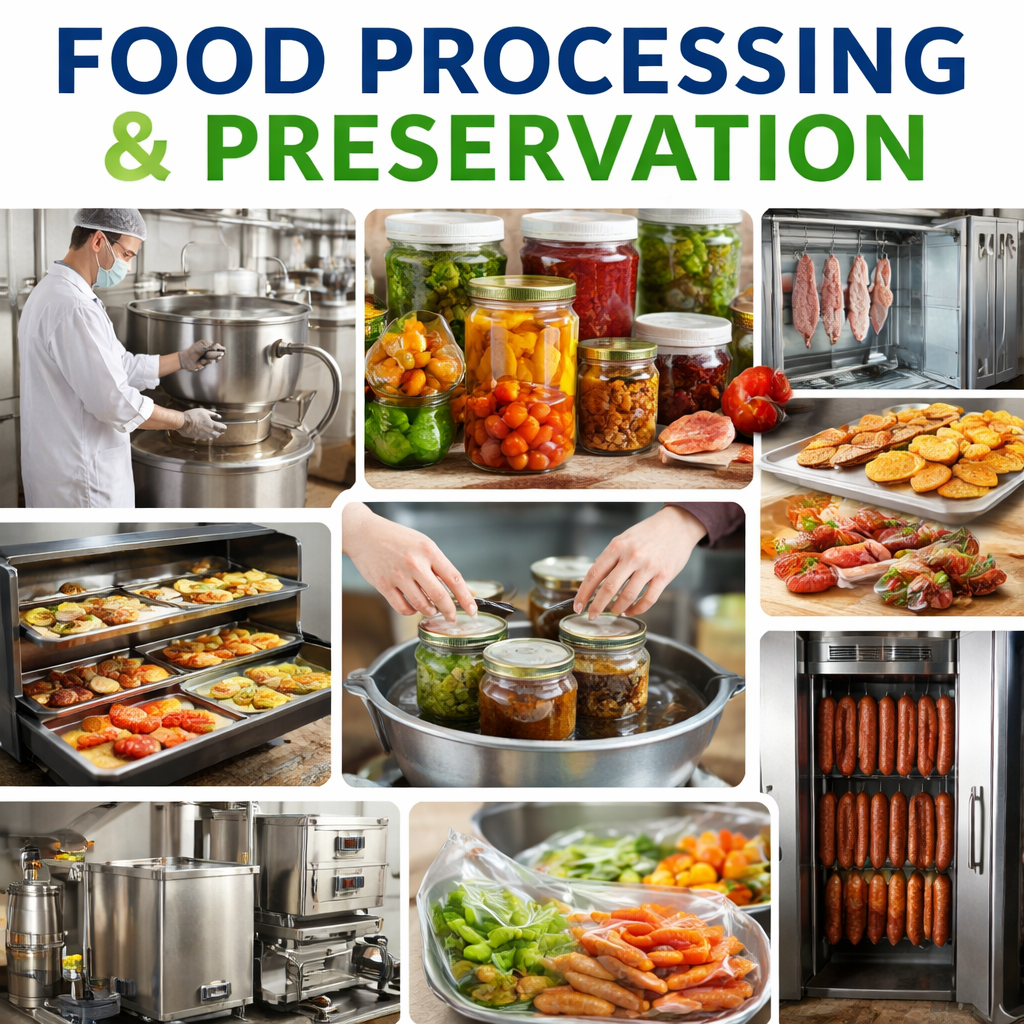
Food Processing and Preservation is a field of study that focuses on the application of scientific and technological methods to transform raw food materials into safe, nutritious, stable, and marketable products.
It involves controlling factors that cause spoilage such as microorganisms, enzymes, chemical reactions, and environmental conditions.
Common preservation methods include drying, refrigeration, freezing, pasteurization, sterilization, fermentation, smoking, salting, and packaging.
The course equips learners with both theoretical knowledge and practical competencies required in food industries, small-scale enterprises, and community-based food production.
Learning Outcomes
By the end of the course/topic, learners should be able to:
1. Explain the Principles and Importance of Food Processing and Preservation
Trainees will be able to clearly describe the scientific principles underlying food processing, including heat transfer, moisture removal, microbial control, and enzyme inactivation. They should explain the economic, nutritional, and safety importance of processing and preservation in reducing post-harvest losses, improving food security, enhancing shelf life, and adding value to agricultural products.
2. Analyze Causes of Food Spoilage and Select Appropriate Preservation Method.
Trainees will be able to identify and differentiate between microbial, enzymatic, chemical, and physical causes of food spoilage.
They should demonstrate the ability to assess different food products and recommend suitable preservation techniques based on product characteristics, storage conditions, and desired shelf life.
3. Apply Food Processing and Preservation Techniques Safely and Effectively
Trainees will demonstrate practical skills in performing common processing and preservation methods such as drying, fermentation, pasteurization, freezing, and packaging.
They should follow standard operating procedures, maintain hygiene and sanitation standards, and ensure food safety throughout the processing stages.
4. Evaluate the Impact of Processing on Food Quality and Nutritional Value
Trainers will be able to assess how different processing methods affect the sensory qualities (color, texture, flavor), nutritional composition, and overall safety of food products.
They should interpret results from practical activities and suggest improvements to maintain product quality while ensuring extended shelf life.
- Teacher: Admin User